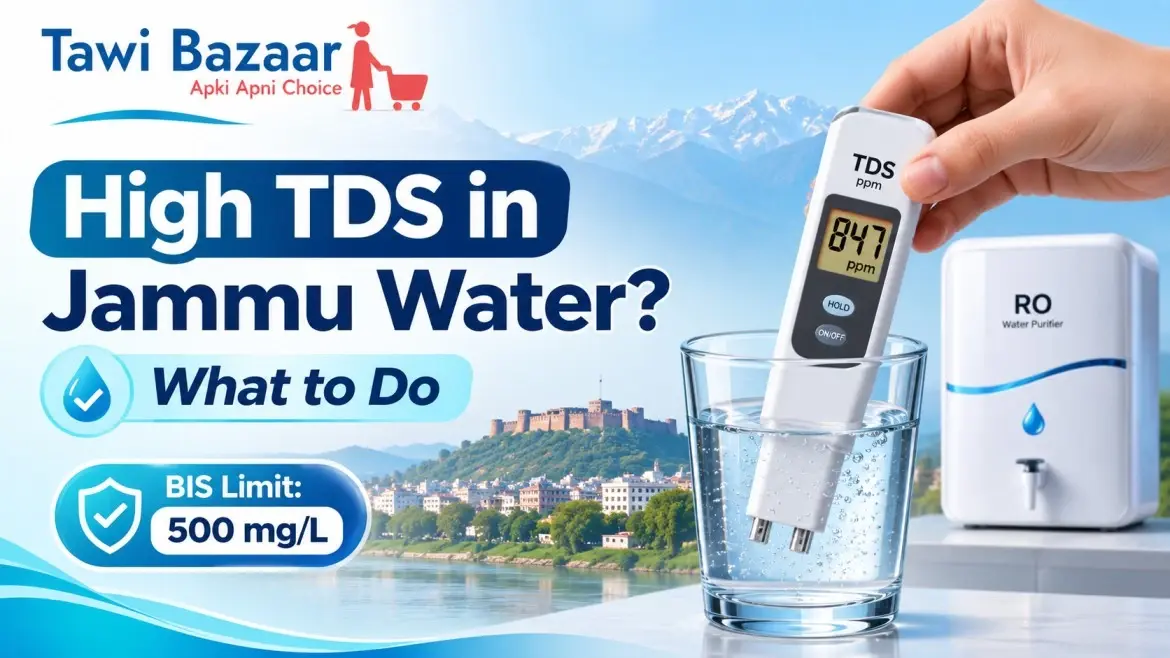
If your TDS reading is high, test a fresh sample first. If it stays high, get a lab test and compare the results with India’s drinking water standard. The Bureau of Indian Standards (BIS) sets an acceptable TDS limit of 500 mg/L. If your reading repeatedly exceeds that level, get the water tested before deciding whether to buy an RO purifier. If a lab confirms that TDS exceeds 2,000 mg/L, use a verified drinking water source while you investigate treatment options. A TDS meter estimates dissolved solids and gives you a starting point for further testing. Jal Jeevan Mission water quality protocol
TDS stands for total dissolved solids. It describes the combined amount of dissolved substances in water, including minerals and salts such as calcium, magnesium, sodium, bicarbonate and chloride. A laboratory reports TDS in milligrams per litre (mg/L). A handheld meter usually displays an estimate in parts per million (ppm), calculated from how well the water conducts electricity.
TDS and hardness measure different things. Hardness mainly reflects the amount of dissolved calcium and magnesium. These minerals contribute to TDS, but so do other substances, including sodium and chloride. That explains why two samples with similar TDS readings can taste different or leave different amounts of scale in a kettle.
When looking for the ideal TDS for drinking water, start with the BIS limit. In India, 500 mg/L or below falls within the BIS acceptable limit for TDS. Drinking water must also meet separate requirements for microbial and chemical quality. There is no single ideal TDS reading that can confirm water is suitable to drink.
| TDS level | How to interpret it under BIS IS 10500 |
| 500 mg/L or below | Within the acceptable limit for TDS. |
| Above 500 to 2,000 mg/L | Above the acceptable limit. BIS permits up to 2,000 mg/L in the absence of an alternate source. |
If a home reading is close to a limit, use a laboratory result to confirm it. Different meters can give different estimates because they use conversion factors to translate conductivity into TDS.
Why is TDS high in water in Jammu? Groundwater can pick up dissolved minerals as it moves through soil and rock. In Jammu, the reading you get depends partly on whether your home uses municipal water, a borewell, tanker water or a mix of sources. If your building switches sources, compare samples taken on different supply days before drawing conclusions.
The Central Ground Water Board’s 2024 pre-monsoon bulletin illustrates why local testing matters. Of 27 shallow groundwater samples in Jammu district, one exceeded 600 mg/L of total hardness, expressed as calcium carbonate, and 13 exceeded 45 mg/L of nitrate. These figures describe the sampled wells. Your tap reading can differ, and a handheld TDS meter cannot tell you whether nitrate is present.
A new salty or mineral taste can be a reason to test your water, especially after a change in supply. White deposits in kettles or around taps are usually a clue that the water is hard. Hard water can also make soap harder to lather. The amount of scale depends on which minerals are present, so use a meter or lab test to find out the TDS level. Clear water with a normal taste can still contain contaminants that require separate testing.
The effects of high-TDS water depend on what is dissolved in it. The WHO has not set a health-based guideline value for TDS as a whole. Taste can change as dissolved solids increase, while health risks depend on individual contaminants and their concentrations. For instance, nitrate has its own drinking water limit under BIS. A low reading also tells you nothing about whether bacteria are present. If you’re concerned about drinking water quality, a lab can recommend chemical and microbial tests based on your source.
1. Take a fresh sample. Use a clean glass rinsed with the water you plan to test. Collect it from the tap you normally use for drinking.
2. Follow the meter instructions. Check the calibration as directed, then dip the probe to the marked depth. Wait for the display to settle.
3. Record the reading. Note the value, date and water source. Repeat the test with a fresh sample if the result is unexpected.
4. Compare before and after filtration. If you already have an RO purifier, test the incoming water and the filtered water in separate rinsed glasses. Compare the results with your usual readings.
5. Confirm persistent changes. If TDS stays above the acceptable limit or shifts unexpectedly, ask a water testing lab which tests suit your source. Follow its sampling instructions, especially for microbial tests.
Reverse osmosis (RO) uses pressure to push water through a membrane that reduces many dissolved salts. If testing shows that dissolved solids are the main concern, compare models rated for your inlet water quality. Check the manufacturer’s evidence for reducing any specific contaminant found in your lab report. NSF/ANSI 58 includes a TDS reduction performance requirement for certified systems, with separate claimsfor specific contaminants. Also check installation requirements, replacement filter costs and how much reject water the unit produces. Once you know the inlet water requirements, you can compare water purifiers by model.
Boiling can kill germs, but dissolved salts remain and can become more concentrated as water evaporates. UV treatment disinfects water and leaves dissolved salts in place. A conventional water softener reduces hardness by exchanging calcium and magnesium for sodium or potassium. If your main concern is scale on taps and fixtures, test hardness separately before choosing a treatment system. If your test results point to a new purifier, start with our guide to home water purifiers by budget.
Repeat the reading, record which water source you tested, and arrange a lab test if the result stays high. If you already have an RO system and its output reading has risen, compare it with the current inlet reading and have the system checked against the manufacturer’s specifications. If you’re buying a purifier, bring your test report so you can compare models based on the water coming into your home. Visit Tawi Bazaar or contact our Jammu store for help comparing models.
TDS means total dissolved solids. It measures the combined amount of dissolved substances, such as minerals and salts, in water.
BIS sets an acceptable TDS limit of 500 mg/L. Drinking water also needs to meet the applicable limits for microbes and individual chemicals.
Yes. A properly selected and maintained RO purifier can reduce dissolved solids. Check the model’s rated inlet water range and the specific reduction claims relevant to your test results.
Check when your source changes, when the taste changes, or when you want to compare RO performance before and after servicing. Follow your purifier manufacturer’s maintenance schedule and use lab testing when you need to assess drinking water quality.
Some groundwater sources in Jammu contain dissolved calcium and magnesium that contribute to hardness. The amount varies by source. A hardness test can help explain scale on your fixtures even when you already have a TDS reading.

Buy Home Appliances Online at Best Prices in Jammu & Kashmir. The best online store for kitchen appliances





Cookie preferences